On this page
By Sumbawa Liveaboard Editorial Desk
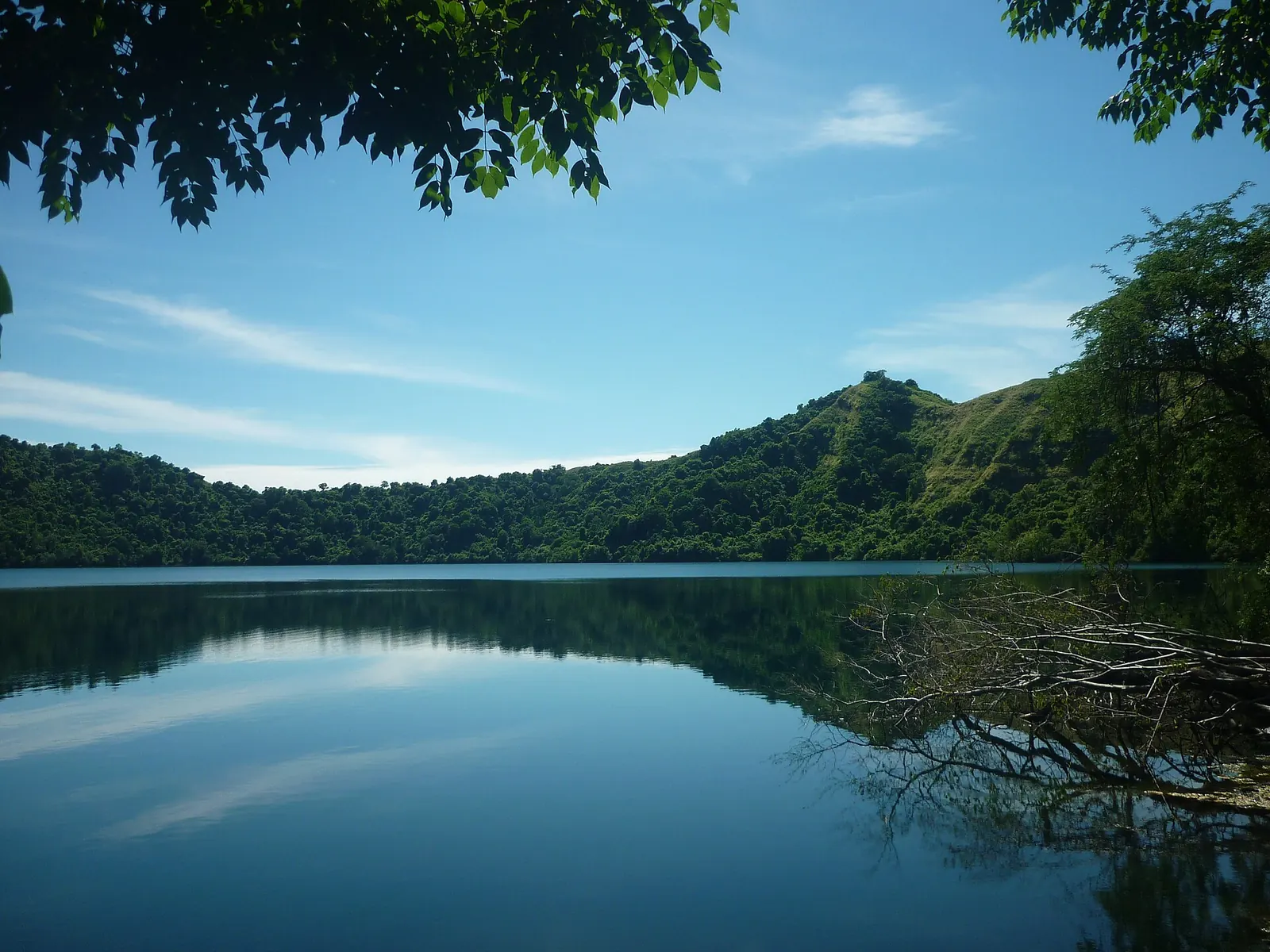
Neither island is simply better. Moyo suits guests who want reef walls, wildlife and a waterfall on a large island, while Satonda suits those drawn to a crater lake with unusual chemistry on a tiny volcanic one. Several published trips name both, so the useful request is more time at one, set out in writing before you pay.
How different are the two islands?
They could hardly be more different in scale. Wikipedia gives Moyo 349 square kilometres, with villages, a resort and a waterfall. Satonda is about 3 by 2 km, a volcanic island in Pekat District of Dompu Regency with a lake in its caldera. Both sit in the national park declared in 2022, which we cover on the Moyo Satonda park page, so the choice is not one of protected against unprotected.
| Feature | Moyo | Satonda |
|---|---|---|
| Size | 349 square kilometres (Wikipedia) | About 3 by 2 km (Wikipedia) |
| Main land draw | Mata Jitu waterfall and pools | Crater lake of 77 hectares |
| Komodo Resort site depths | 5 to 30 m | 10 to 35 m |
| Sites named by operators | Angel Reef, Little Angel, Panjang Reef | Sumbawa Surprise, plus a night dive |
| People | Two administrative villages; one Aman resort | Tradition of wishing trees kept by Nangamiro villagers, per Seatrek |
| Science interest | 21 bat species on the island list | Stratified lake with calcareous reefs |
That table is the core of the decision. Moyo is a place with range, where a longer stop keeps paying off. Satonda has one extraordinary feature on a small footprint. Neither of those is a ranking, and the right answer depends on what you want from the day.
Which suits walkers and swimmers?
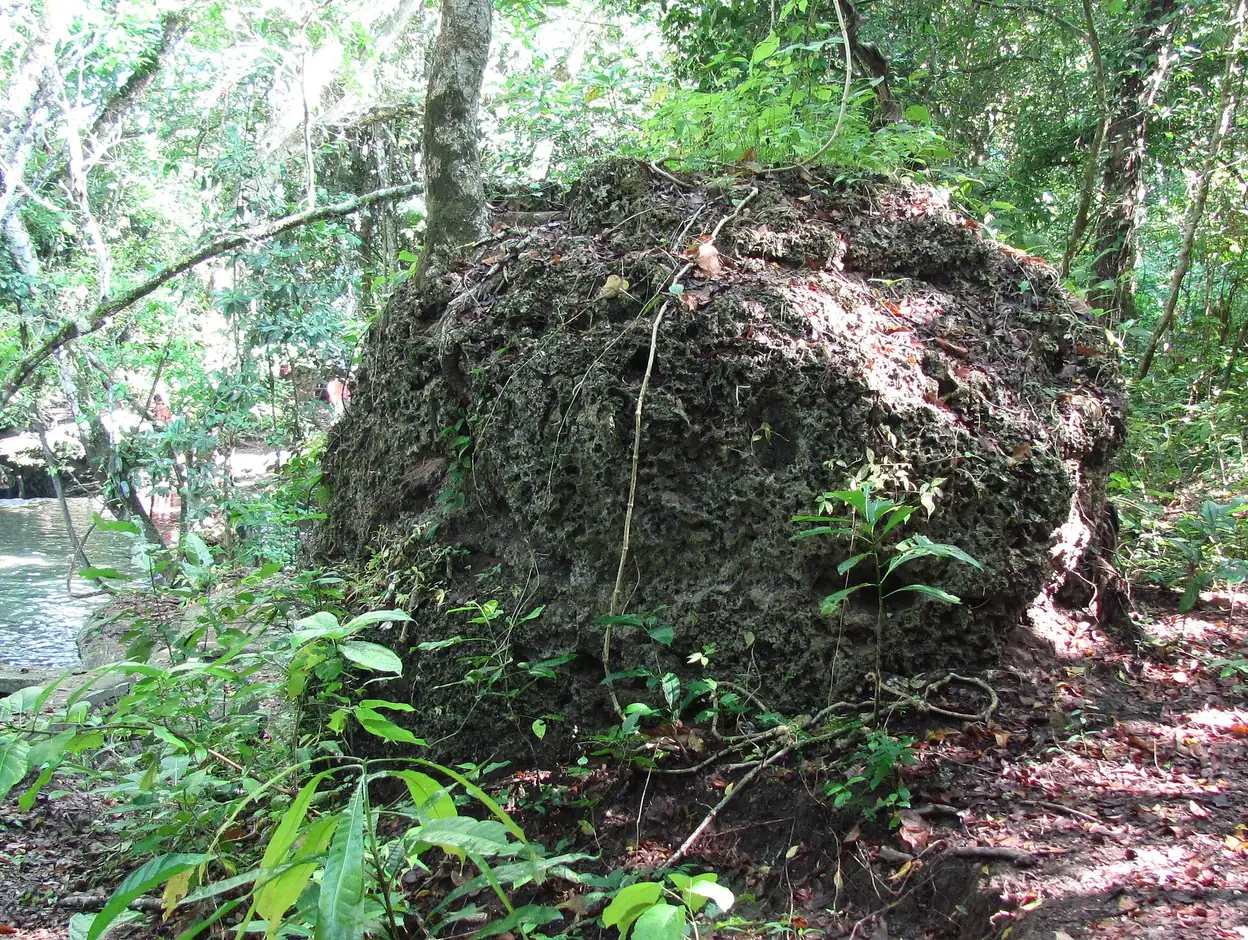
Moyo has the firmer case, simply because its land access is documented. Wikipedia puts Mata Jitu about 4 km from Labuhan Aji. The Langkah says the pools are reached by motorbike taxi and then about a five-minute walk, so this is not a demanding hike unless you choose to make it one. Komodo Resort suggests hiking shoes for Moyo, which is a sensible precaution on any wet path.
The strongest flow, per The Langkah, comes in April and May. Guests travelling later in the dry season may find less water. Our Moyo Island guide covers access in more detail, including what to confirm about time ashore, and the Satonda Island guide does the same for the lake stop.
Satonda is harder to advise on, with no published walking distance from the beach to the lake. Operators may invite guests in, and that invitation is not the same as an official position on safety or permission. If a swim in the crater is your reason for going, raise it with the boat before you book, and be prepared to walk the shore instead.
Which suits divers?
Moyo has more published detail, while Satonda offers a contrast. Arenui describes Angel Reef, off Moyo's west coast, as a vertical wall to over 40 m. Coralia adds Little Angel and Panjang Reef to the Moyo list. At Satonda, Coralia names Sumbawa Surprise and a night dive. Komodo Resort's site ranges overlap heavily, 5 to 30 m at Moyo and 10 to 35 m at Satonda, so maximum depth should not be what decides this.
A diver who likes walls should ask for a second Moyo dive. A diver who values a night dive in the itinerary can reasonably ask for an evening at Satonda. The boat's route to its next stop limits how much it can change, but asking early costs nothing and shows the operator what you care about.
Snorkellers should note a detail in the depth lists: Satonda's published range starts at 10 m, and Moyo's at 5 m. Neither figure was written for snorkellers, so ask to be taken to the shallowest reef at either stop.
Which has the stranger science?
Satonda, without much contest. Wikipedia describes a 77-hectare lake in two intersecting craters, 39 and 69 m deep. A hydrochemical study calls it sea-linked, mildly alkaline, stratified and species-poor, and says it supports cyanobacterial and red algal calcareous reefs. Wikipedia records those reefs at 13 sites around the lake, with a diverse sea reef only 100 m from the lake. That contrast is the real reason to go.
Be wary of how this is sold. Some operators call the lake hypersaline or simply a saltwater lake, which does not match the study or Wikipedia's account of an upper layer less saline than seawater. The page on Satonda's chemistry goes through the evidence.
Moyo's interest is ecological and more conventional. Its bat list is striking, and UNESCO's reserve entry puts deer, boar, macaques and python on both islands. Wildlife can stay hidden on any given day. Water chemistry stays put, so Satonda's story holds up even when nothing moves.
Can you do both?
Yes, and several published trips name both. Coralia's sample 10-night round trip from Labuan Bajo covers Moyo, Saleh Bay and Satonda. Komodo Resort says Neptune One's crossing follows the north coast past both, though a landing is not stated. Sumbawa Tour's private 4D/3N programme runs from Sumbawa Besar to Satonda, then whale shark mornings, then Moyo. Tiger Blue's 10-night Labuan Bajo trip names Moyo alone in its description, so not every Sumbawa route gives both islands equal billing.
The realistic question is how to divide the time. A boat has a route to keep, so a request for an extra Moyo dive or a longer Satonda stop may cost something elsewhere. Ask before you pay, and ask what the operator would drop. The page on how Sumbawa routes compare sets out where each trip starts and how long it runs, and published whole-trip rates are on the cost page.
How should you decide which to prioritise?
| If your priority is | Ask for more time at | Basis |
|---|---|---|
| A waterfall and natural pools | Moyo | The Langkah; Wikipedia |
| Wall diving | Moyo | Arenui on Angel Reef |
| Land wildlife | Moyo | Wikipedia species list; UNESCO |
| A crater lake with unusual chemistry | Satonda | Hydrochemical study; Wikipedia |
| A night dive named in the itinerary | Satonda | Coralia sample |
| A short trip from Sumbawa Besar | Neither needs dropping | Sumbawa Tour programme |
Put your preference into your first message to the operator, because a request made while the itinerary is being drafted is far easier to meet than one made on board, when the plan is already set around other guests and the next anchorage.
What other questions come up when choosing between them?
Can one liveaboard include both the Moyo waterfall and Satonda's crater lake?
Yes, in principle, but ask for both by name. Sellers' itineraries can list the two islands without saying whether the waterfall trip or the lake walk is scheduled, and a stop for diving alone would not cover either.
How much does a liveaboard combining Moyo and Satonda cost?
No published rate prices that combination on its own. Operators charge per trip and per cabin, so compare whole trips and then ask what a longer stop at either island would change.
Can you swim in Satonda's crater lake?
That is unconfirmed, because no rule from the park manager or another official source has turned up. Ask your guide at the lake, and do not assume a past guest's swim sets the rule.
Is Moyo or Satonda the better stop on a short trip?
Neither has to go on Sumbawa Tour's programme, which lists both in its private 4D/3N sequence from Sumbawa Besar. On a shared route, check the stops first, because they differ by boat.
Is Satonda lake a saltwater lake?
Not in the simple sense. Wikipedia says its upper layer is less saline than seawater and more alkaline, and a hydrochemical study calls the lake mildly alkaline and sea-linked.
Which sources support this page?
- Wikipedia: Moyo Island
- Wikipedia: Satonda Island
- The Langkah Travel: Moyo Island guide
- Komodo Resort: Sumbawa liveaboard page
- Arenui: sample Komodo and Sumbawa itinerary, 10 days 9 nights
- Coralia Liveaboard: sample Komodo and Sumbawa itinerary (PDF)
- Hydrochemical study: Satonda Crater Lake, hydrogeochemistry and biocarbonates
- Seatrek Bali: Satonda Lake
- UNESCO: Saleh-Moyo-Tambora (SAMOTA) Biosphere Reserve
- Sumbawa Tour: private 4D/3N liveaboard programme
- Tiger Blue: Sumbawa destination page
How do I reach the desk?
Tell the desk which island you would give more time to, and when you hope to travel, on WhatsApp +62 811-3941-4563 or at bd@juaraholding.com. Any route or stop only becomes firm once it is set out in a written offer.
Send the desk your route, dates, and group size. The desk replies in writing.
Ask the desk on WhatsApp bd@juaraholding.com